
Alanic Official Blog
Sports Apparel Insights & News
Latest Trends & Guides for Activewear Brands
Private Label & Custom Marathon Gear Solutions
Explore industry trends, sportswear manufacturing guides, and event apparel tips.
Best China Wholesale Activewear Clothing Supplier?
Table of Contents
- How China’s Wholesale Activewear Supply Market Is Structured
- Which Activewear Products Chinese Suppliers Commonly Offer
- How to Assess Supplier Quality, Capacity, and Compliance
- How Pricing, Minimum Orders, and Customization Affect Sourcing
- How to Compare Suppliers and Choose the Right Partner
- FAQS
- Conclusion
- Related Posts
Choosing the best China supplier for Wholesale Activewear Clothing takes more than comparing prices. A product photo cannot show how leggings feel after repeated washing or whether seams stay secure during movement. Buyers should check fabric composition, stretch and recovery, stitching quality, sizing consistency, and available test reports. Small details matter. A clear size chart and a carefully finished waistband can prevent costly surprises later.
Ask potential suppliers about sample development, minimum order quantities, production capacity, quality checks, and realistic lead times. Request a sample in the same fabric and construction planned for bulk production. Then inspect the garment under practical conditions: stretch it, check the seams, and compare measurements with the specification sheet. Useful answers should be specific, not just reassuring. Still, even a detailed reply is not proof; verify important claims through samples, records, and direct communication.
A reliable partner also explains limits, flags delays early, and confirms design changes in writing. Some factories may offer fabric sourcing, private labeling, or packaging support, but availability should be confirmed rather than assumed. Compare suppliers using the same requirements, and keep a written record of prices, materials, and approved samples. There is no perfect checklist. A sample may feel excellent yet reveal issues after washing, so leave room for testing and correction before placing a large order. The strongest choice is usually the supplier whose quality, communication, and delivery commitments remain consistent—not simply the one with the lowest quote.
How China’s Wholesale Activewear Supply Market Is Structured
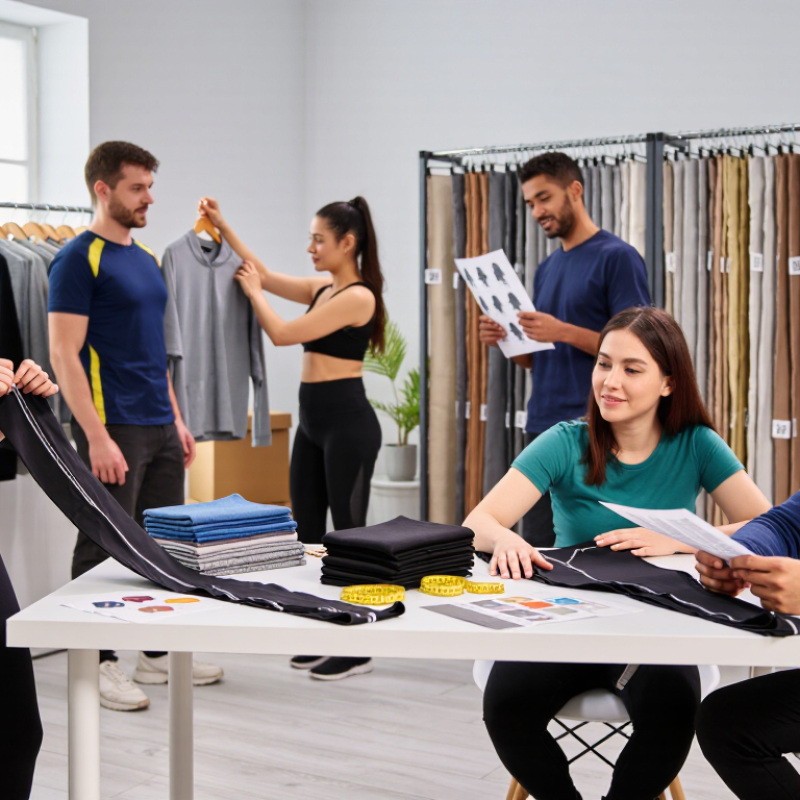
China’s wholesale activewear market is a network of factories, specialist workshops, and trading companies, not one uniform supplier pool. Some factories knit fabric, cut panels, and sew garments under one roof. Others handle only sewing and source fabric from separate mills. Trading companies may coordinate several production steps, which can help buyers with smaller orders but adds another layer of communication.
Supplier clusters in Guangdong, Zhejiang, and Fujian offer different combinations of garment production, fabric access, and shipping services. The exact capabilities vary by factory, so a location alone does not prove expertise. Ask who controls fabric sourcing, printing, stitching, and final inspection. Request a sample with the intended fabric weight, stretch, and seam details. Small differences matter. A polished sample can still hide inconsistent sizing across a bulk order, and I would not treat a written quality promise as a substitute for checking production records or inspecting goods.
Minimum order quantities often depend on fabric availability, color count, and whether custom labels or trims are required. Confirm these details before comparing prices. Also ask for a production timeline that separates sampling, bulk manufacturing, and packing. Not always easy. Clear answers about tolerances, rework, and inspection methods are often more useful than the lowest quote. Sourcing takes judgment; even careful checks cannot remove every production risk.
Which Activewear Products Chinese Suppliers Commonly Offer
Chinese activewear suppliers commonly offer leggings, sports bras, training tops, shorts, joggers, and lightweight jackets. Many factories also make coordinated sets for yoga, gym training, and everyday movement. Fit comes first. Leggings may have high or mid-rise waistbands, while sports bras range from light support to firmer compression. Ask which activity and support level each sample is designed for.
Fabric choices often include polyester, nylon, and elastane blends. Suppliers may offer brushed finishes, four-way stretch, and moisture-wicking treatments, but these terms do not guarantee the same feel across factories. Check the fabric composition and request a sample. During testing, squat, stretch, and wash it. Look for sheerness, waistband rolling, loose threads, and color changes. Details matter.
Product ranges can also include plus-size grading, longline bras, cycling shorts, and warm-up layers. Custom options may cover colors, labels, prints, pocket placement, and size specifications. Confirm minimum order quantities, available size ranges, and sample timelines before planning a launch. A polished sample is useful, but it cannot prove every production piece will match. That point is easy to overlook; checking measurements and workmanship during production can prevent avoidable surprises.
Which Activewear Products Do Chinese Suppliers Commonly Offer?
Typical activewear product categories, illustrated with example product types.
Counts show the example product types listed for each category. They are not supplier counts, market shares, or a ranking of availability.
How to Assess Supplier Quality, Capacity, and Compliance
Choosing a China wholesale activewear supplier requires evidence beyond polished samples. Check fabric composition, stretch recovery, colorfastness, seam strength, and shrinkage after washing. Ask for recent test reports and confirm that they cover the exact fabric and product you plan to order. For capacity, compare monthly output with machine lists, staffing, production schedules, and records from peak seasons. A factory may promise volume, yet struggle to keep sizing consistent.
Compliance deserves equal scrutiny. The OECD’s garment and footwear due-diligence guidance recommends identifying, preventing, and tracking supply-chain impacts. Ask who makes the garments, how working hours are recorded, and whether subcontracting is disclosed. UNEP’s 2023 roadmap estimates textiles produce 2–8% of global greenhouse-gas emissions, making wastewater and energy practices relevant checks. A polished audit file can still miss a rushed shift. That gap deserves attention.
Tips: Request a small pilot order before scaling up. Measure several pieces from different cartons, not just one sample. Check certificates with the issuing body, and record corrective actions with deadlines. If an answer stays vague, pause. A supplier’s willingness to show production evidence often matters more than a low quote.
Best China Wholesale Activewear Clothing Supplier? - How to Assess Supplier Quality, Capacity, and Compliance
| Assessment dimension | What to assess | Evidence to request | Practical checks and benchmarks |
|---|---|---|---|
| Product and material quality | Fabric composition, weight, stretch and recovery, opacity, seam construction, and consistency between production lots. | Fabric specification sheet, approved swatches, sample garments, test reports, and written inspection records. | Compare bulk fabric and finished garments against an approved reference sample. Test performance using methods suited to the product, such as ISO 105 methods for colour fastness or ISO 13934-1 for fabric tensile properties. |
| Fit and size consistency | Measurement tolerances, grading between sizes, fit across intended body shapes, and repeatability of key measurements. | Size spec, graded measurement chart, fit samples, measurement records, and the agreed tolerance for each measurement point. | Agree tolerances in writing before production. Measure samples and randomly selected finished pieces with the same method and points listed in the spec. |
| Performance and durability | Pilling, seam strength, shrinkage, colour fastness, print or heat-transfer durability, and fabric recovery after use and care. | Recent laboratory reports for comparable materials, care instructions, wash-test results, and records of corrective actions for failed tests. | Set pass/fail requirements for the intended use and destination market. Confirm that reports identify the tested material and test method; a report for a different fabric does not verify the current order. |
| Quality control process | Incoming-material checks, in-line inspections, final inspection, defect classification, and traceability by order or production lot. | Quality procedures, inspection checklists, sample inspection reports, defect records, and documented corrective-action examples. | Agree the inspection plan, sample size, defect definitions, and acceptance criteria before production. ISO 2859-1 provides sampling procedures, but the buyer and supplier must agree the applicable plan and limits. |
| Production capacity | Available sewing and finishing lines, current order load, staffing, equipment, and ability to handle the required styles and size range. | A production plan showing line allocation, planned quantities, working days, key production stages, and capacity assumptions. | Check capacity against the specific order and delivery window. A useful planning calculation is required units ÷ planned production days; verify that the proposed daily output is supported by line and staffing plans. |
| Lead time and delivery reliability | Material sourcing time, sample approval, bulk production, inspection, packing, and shipping handover dates. | Stage-by-stage timeline, material availability confirmation, recent on-time delivery records, and escalation contacts. | Build in time for sample approval, testing, and corrective work. Confirm whether quoted lead time starts from deposit, final specification approval, or another milestone. |
| Order flexibility and minimums | Minimum order quantities by style, colour, and fabric; size ratio flexibility; and policies for repeat orders or changes. | Written quotation, minimum quantity schedule, size breakdown rules, and change or cancellation terms. | Confirm whether minimums apply to the whole order or separately to each style, colour, and fabric. Check whether small runs affect price or delivery time. |
| Chemical and product compliance | Applicable chemical restrictions, product safety rules, fibre-content claims, and labelling requirements for each sales market. | Current test reports, material declarations, supplier declarations, and labels or packaging reviewed for the destination market. | Determine requirements by destination and product type. For EU sales, review applicable REACH restrictions and textile fibre-name and composition labelling rules. For US sales, check applicable textile labelling and product-safety requirements; children’s products may have additional rules. |
| Social and workplace compliance | Working hours, wage records, health and safety, worker age verification, and subcontracting controls. | Recent independent audit reports where available, corrective-action plans, workplace policies, and a list of production locations and subcontractors. | Check audit scope, date, site, and unresolved findings. Confirm in writing that subcontracting requires buyer approval and that the same standards apply at approved production sites. |
| Business and traceability documents | Business identity, production location, order documentation, material origin records, and consistency between the contracting party and payment details. | Business registration documents, factory address, signed quotation or contract, invoices, and relevant shipment or material records. | Verify documents independently where practical. Ensure the contract identifies product specifications, quantity, price, delivery terms, inspection rights, and remedies for non-conforming goods. |
| Overall supplier decision | Whether documented capability, product performance, capacity, compliance, and communication meet the buyer’s requirements. | Completed assessment checklist, approved pre-production sample, agreed production plan, and signed specifications and terms. | Use a trial order before scaling up. Treat the criteria above as a buyer assessment framework; legal requirements and suitable acceptance limits vary by product, market, and order. |
How Pricing, Minimum Orders, and Customization Affect Sourcing
Choosing a China wholesale activewear supplier involves more than comparing the quoted price per piece. Ask what the quote includes: fabric, stitching, labels, packaging, and shipping preparation. A low price may reflect lighter fabric or fewer finishing steps. Request a sample and check its stretch, opacity, seams, and recovery after washing. Small details matter.
Minimum order quantities can change the true cost. A supplier may accept a modest order for one style but require larger quantities for each color or size. Ask for the breakdown in writing. For example, confirm whether 300 pieces can be split across three colors, or whether each color requires 300 pieces. Small runs cost more. That trade-off matters when demand is uncertain.
Customization also affects lead time and pricing. Printed panels, custom waistbands, and revised size labels may require separate setup work or fabric sourcing. Send a clear specification sheet with measurements, material weight, color references, and logo placement. Then approve a pre-production sample before bulk cutting begins. I would still leave room for error: factory measurements can vary slightly, and one sample cannot prove every production unit will match. Agree on inspection points and acceptable tolerances before confirming the order.
How to Compare Suppliers and Choose the Right Partner
Best China Wholesale Activewear Clothing Supplier?
Comparing suppliers means checking more than price and a polished sample. Request fabric composition, weight in GSM, stretch recovery, colorfastness results, and written production lead times. Ask whether the quoted price includes labels, packaging, and sample costs. Small details matter. The Textile Exchange’s Materials Market Report 2024 estimates that global fiber production reached 124 million tonnes in 2023, with polyester accounting for about 57%. This makes clear material specifications especially useful when comparing activewear quotes. A sustainability claim alone is not proof; ask for supporting documentation and confirm that it matches the fabric being offered.
For a fair comparison, send each supplier the same tech pack and size range. Order samples, then check seams, waistband recovery, and opacity under bright light. Ask how defects are recorded and what happens if bulk goods differ from the approved sample. Review production capacity, communication speed, and quality-control records, not just the lowest MOQ. A neat sample can still hide uneven bulk production. And a detailed scorecard can miss practical issues, such as slow replies during a fitting revision.
FAQS
It includes factories, specialist workshops, and trading companies. Some factories knit, cut, and sew garments. Others only sew. Ask who handles fabric, printing, stitching, and inspection. Location alone proves little.
Common options include leggings, sports bras, training tops, shorts, joggers, and lightweight jackets. Coordinated sets are also available. Fit comes first.
Ask for the exact fabric composition and weight. Test a sample by stretching, squatting, and washing it. Check for sheerness, waistband rolling, loose threads, and color changes. Feel matters.
Options may include colors, labels, prints, pocket placement, and size specifications. Confirm available size ranges and minimum order quantities before planning a launch. Details matter.
Check stretch recovery, colorfastness, seam strength, and shrinkage after washing. Measure pieces from several cartons during production. A polished sample cannot prove every item will match.
Compare promised output with machine lists, staffing, schedules, and peak-season records. Ask for a separate timeline for sampling, bulk production, and packing. Promises can sound convincing.
Ask who makes the garments, how working hours are recorded, and whether subcontracting is disclosed. Review wastewater and energy practices too. A file may miss a rushed shift.
Yes. It can reveal sizing or workmanship issues before a larger order. Record corrective actions and deadlines. I may be overcautious, but vague answers deserve a pause.
Conclusion
Choosing the right Wholesale Activewear Clothing supplier in China starts with understanding how the market is organized. Suppliers may specialize in particular product categories, production methods, or order sizes, and their offerings can include leggings, sports bras, tops, shorts, jackets, and coordinated sets. Identifying which products a supplier makes regularly can help determine whether its experience matches your needs.
Before committing, assess fabric and construction quality, production capacity, communication, and relevant compliance documentation. Compare pricing alongside minimum order quantities, sample costs, lead times, and customization options such as colors, sizing, materials, and packaging. A lower quoted price may not represent the best overall value if it comes with limited quality control or inflexible terms. Requesting samples, confirming production details, and comparing several suppliers against the same criteria can make the decision more reliable. The best partner is one whose capabilities, service, and terms align with your product goals and expected order volume.

Blog Tags: