
Alanic Official Blog
Sports Apparel Insights & News
Latest Trends & Guides for Activewear Brands
Private Label & Custom Marathon Gear Solutions
Explore industry trends, sportswear manufacturing guides, and event apparel tips.
How to Choose a Sublimation Sportswear Manufacturer?
Table of Contents
- What Is a Sublimation Sportswear Manufacturer?
- Which Manufacturing Capabilities Should You Evaluate?
- How to Compare Fabrics, Printing Quality, and Product Options?
- What Certifications and Production Standards Matter?
- How Should You Assess Pricing, Samples, and Communication?
- FAQS
- Conclusion
- Related Posts
Choosing a sublimation sportswear manufacturer is not simply a price comparison. It is a practical decision about fabric performance, print durability, production control, and long-term trust. In Sublimation Sportswear Manufacturing, small details can affect an athlete’s comfort during a demanding match. A poorly selected fabric may feel heavy, trap heat, or lose shape after repeated washing. The right supplier should understand these risks and explain them clearly.
Begin by examining real production evidence. Ask for fabric specifications, colorfastness results, stitching samples, and photographs of completed team orders. Better still, request a physical sample before approving bulk production. Check the printed edges, seams, collar construction, and inside finishing. These details reveal more than a polished website. A reliable manufacturer should also describe its quality-control process, sampling timeline, minimum order quantity, and correction policy without vague promises.
Experience matters, but it should be verifiable. Look for manufacturers that serve sports teams, clubs, schools, or performance brands with similar requirements. Review customer feedback carefully, especially comments about delivery consistency and communication. Certifications can support credibility, yet they do not replace direct inspection. A factory may display impressive claims and still miss basic measurements. That possibility deserves attention.
Your decision should also reflect production ethics, transparent sourcing, and compliance with applicable standards. Discuss recycled fabrics, packaging choices, worker safety, and responsible wastewater practices where relevant. These questions are not decoration. They show how seriously a supplier manages its business. No manufacturer is perfect, and early samples may expose weaknesses. That is useful information, not failure. The strongest partnership grows when both sides document problems, correct them, and keep improving.
What Is a Sublimation Sportswear Manufacturer?
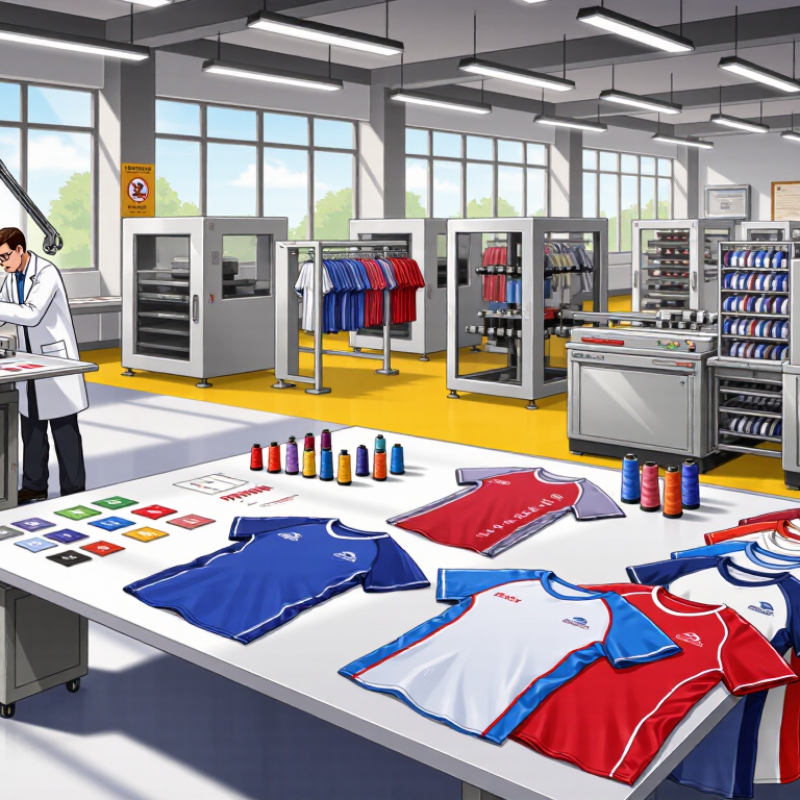
A sublimation sportswear manufacturer turns digital artwork into durable athletic clothing. The process uses heat to transfer dye into polyester fabric. Unlike surface printing, sublimation colors become part of the fibers. This helps reduce peeling during washing and repeated training. A capable manufacturer usually manages fabric sourcing, pattern cutting, printing, stitching, and final inspection. Ask whether these steps happen under one quality system. Small gaps between departments can affect fit and color accuracy.
Professional knowledge matters beyond attractive samples. The manufacturer should understand fabric weight, stretch recovery, moisture management, and print alignment. For example, a cycling jersey needs different construction from a loose basketball shirt. Request wash-test results, color references, measurement charts, and production samples. Check seams around shoulders, waistbands, and pockets. These areas often reveal rushed workmanship. A reliable supplier also explains realistic lead times and reports problems before shipment. Promises alone are not evidence.
Tips: Compare the approved sample with bulk production. Inspect ten garments, not only one. Confirm artwork files, fabric composition, size tolerance, and packaging details in writing. Ask how defective pieces are recorded and replaced. Perfect results are never automatic. Even experienced teams can miss a small shade difference. A careful review process catches it before players receive the uniforms.
Which Manufacturing Capabilities Should You Evaluate?
Choosing a sublimation sportswear manufacturer requires more than checking a catalog.
Evaluate the production system behind each garment. Ask about printer resolution, ink consistency, heat-press calibration, and color-profile management. Samples can mislead. Request wash, stretch, crocking, and perspiration tests from the same fabric lot. AATCC methods or equivalent ISO procedures make results comparable. Textile Exchange’s 2024 Materials Market Report estimates polyester represented 57% of global fiber production in 2023. Therefore, the factory must understand polyester’s heat behavior, not merely own a transfer printer.
Capacity also requires measurable evidence.
Review monthly machine hours, cutting capacity, sewing lines, operator skills, and peak-season utilization. Ask how orders are scheduled when multiple teams need identical colors. A capable supplier should provide lead-time records, defect rates, reprint rates, and corrective-action logs. The ITMF 2024 Global Textile Industry Survey reported continued pressure from weak demand and uneven utilization across textile manufacturing. That makes claimed capacity less convincing without recent production data. Require a pilot order. Track shade deviation, panel alignment, seam strength, and packing accuracy.
Evaluate digital workflow and traceability, too.
Artwork approval, file version control, barcode scanning, and lot records reduce preventable errors. If recycled polyester is offered, request reliable chain-of-custody documents. Textile Exchange reported recycled polyester represented about 14% of polyester production in 2023. A factory may pass an audit yet struggle with urgent revisions. Discuss that weakness openly. Measure the details.
How to Compare Fabrics, Printing Quality, and Product Options?
How to Choose a Sublimation Sportswear Manufacturer?
Fabric selection affects comfort, durability, and print clarity. For most sportswear, compare polyester content, fabric weight, stretch, and moisture management. A fabric with 140–180 GSM may feel light for running, while 200 GSM can suit training tops. Ask for fabric samples before placing a large order. Rub the surface gently. Loose fibers can reveal weak finishing.
Printing quality needs more than bright colors. Check whether the artwork remains sharp around fine lines and small numbers. Request a physical sample, not only digital images. Wash it several times and inspect fading, cracking, and color transfer. Reliable manufacturers should explain their heat-transfer settings, color calibration, and quality checks. Ask for test records when available. Small details matter.
Product options should match your team’s real use. Compare jerseys, shorts, leggings, jackets, socks, collars, and size ranges. Check seam construction, zipper quality, waistband recovery, and customization areas. A factory may offer many choices, but flexibility can create inconsistent results. My own sample reviews are not flawless, especially when lighting changes color perception. Use daylight and a simple checklist. Also compare replacement policies, sample timelines, and communication speed before approving production.
Compare manufacturers by checking how well their commonly offered fabrics support sublimation, moisture management, stretch, and durability. The scores use a practical 1–5 purchasing benchmark, where 5 represents stronger suitability for performance sportswear.
What Certifications and Production Standards Matter?
How to Choose a Sublimation Sportswear Manufacturer?
Certifications provide a useful starting point, but they should never replace factory verification. ISO 9001 indicates a documented quality management system. It does not guarantee perfect jerseys. Ask whether the certificate covers the actual production site and current product scope. A valid OEKO-TEX Standard 100 certificate can support safer textile claims, while ISO 14001 may show structured environmental management. For recycled polyester, request a recognized recycled-content certification with traceability records.
Production standards matter even more during bulk manufacturing. The supplier should control artwork files, color profiles, fabric composition, and heat-press settings. Ask for printed strike-offs before approval. Check color consistency under daylight, not only under showroom lights. Test wash fastness, fabric shrinkage, seam strength, and print clarity after repeated washing. Sublimation usually works best on polyester fabrics, but different fabric weights can change the final color. Small differences become obvious across a team uniform order.
Request batch records, inspection reports, and corrective-action procedures. A reliable manufacturer should explain what happens when a panel shows banding, ghosting, or uneven saturation. Certificates can be real yet outdated. A sample can pass while bulk production fails. This is where many buyers become too confident. An independent pre-shipment inspection adds useful evidence, although it also has limits. The best decision combines documents, physical testing, production communication, and a visit or live factory review when possible.
| Certification or Standard | What It Verifies | Why It Matters for Sublimation Sportswear | Evidence to Request | Recommended Procurement Benchmark | Priority | Renewal or Review |
|---|---|---|---|---|---|---|
| ISO 9001:2015 Quality Management Systems |
Documented quality processes, internal controls, corrective actions, customer-focus procedures, and continual improvement. | Helps control artwork approval, fabric inspection, color consistency, cutting, sewing, printing, final inspection, and complaint handling. | Valid certificate, certification body details, scope covering garment manufacturing, and the latest audit or surveillance record. | Certificate should be current and the stated scope should include the actual production site and relevant apparel activities. | Preferred | Usually subject to annual surveillance and a three-year certification cycle. |
| OEKO-TEX® STANDARD 100 | Testing of finished textile products and components for harmful substances according to the applicable product class. | Provides additional confidence that polyester fabric, thread, labels, elastics, and other tested components meet defined human-ecological limits. | Current certificate number, product class, tested article information, validity, and confirmation that the supplied fabric or finished item is covered. | Use a certificate that covers the actual fabric or finished garment rather than relying only on a general factory certificate. | Preferred | Certificates are generally valid for one year. |
| Global Recycled Standard (GRS) | Third-party verification of recycled material content, chain of custody, social requirements, environmental practices, and chemical restrictions. | Useful when recycled polyester is specified and traceability from the recycled input through processing and garment production is required. | Valid scope certificate, transaction certificate for the shipment, approved product scope, and recycled-content percentage. | Require transaction-level documentation when making recycled-content claims; do not accept a factory certificate alone as proof for every order. | Conditional | Certification and transaction documentation are subject to the program’s current validity and audit rules. |
| Recycled Claim Standard (RCS) | Verification of recycled material content and chain of custody through the supply chain. | Can support recycled-fiber claims when the buyer needs material traceability but does not require the broader social and environmental criteria associated with GRS. | Current scope certificate, transaction certificate, approved material description, and verified recycled percentage. | Match the certificate and transaction documents to the exact yarn, fabric, colorway, and order quantity. | Conditional | Check current certificate validity and transaction documentation for each applicable shipment. |
| ISO 14001:2015 Environmental Management Systems |
A structured environmental management system covering significant impacts, legal compliance, objectives, monitoring, and continual improvement. | Relevant to dyeing, sublimation transfer, energy use, waste handling, wastewater control, chemical management, and packaging reduction. | Current certificate, site scope, environmental policy, audit status, and evidence of monitoring for waste, energy, and applicable emissions. | Prefer certification for wet-processing or printing facilities when environmental performance is a major sourcing requirement. | Preferred | Usually subject to annual surveillance and a three-year certification cycle. |
| WRAP Certification Worldwide Responsible Accredited Production |
Independent assessment against workplace principles covering lawful, humane, and ethical manufacturing practices in sewn-product facilities. | Helps evaluate labor conditions, working hours, wages, health and safety, forced labor, child labor, and workplace conduct. | Current certificate, facility name and address, certification level, scope, and audit validity. | Suitable where the buyer requires a recognized social-compliance program specific to apparel or sewn-product production. | Preferred | Validity depends on the certification level and current program rules; verify before order placement. |
| SA8000® Social Accountability Management System |
Management-system requirements for labor rights, including child labor, forced labor, health and safety, discrimination, working hours, and remuneration. | Provides a structured framework for assessing worker welfare and social performance at the manufacturing site. | Current certificate, accredited certification body, site scope, audit status, and corrective-action information where available. | Prefer when the sourcing policy requires a formal social-accountability management system rather than a one-time factory audit. | Conditional | Confirm current validity and surveillance status with the issuing certification body. |
| ISO 105-C06 Colour Fastness to Domestic and Commercial Laundering |
A laboratory method for assessing color fastness during specified washing and drying procedures. | Important for sublimated graphics and polyester garments that must retain acceptable color after repeated laundering. | Test report identifying fabric or garment, color, test method, washing condition, rating, laboratory, and test date. | Set the required grade by product use and buyer specification; do not use an unspecified “wash-fast” claim as acceptance criteria. | Required Test | Repeat for new fabric lots, major artwork changes, or process changes. |
| ISO 105-X12 Colour Fastness to Rubbing |
A laboratory method for determining color transfer from a textile surface to a rubbing cloth under dry and wet conditions. | Helps assess whether dark or highly saturated sublimation designs may transfer color during handling, wear, or contact with other materials. | Report showing dry and wet rubbing results, test direction, specimen details, rating scale, and laboratory information. | Specify separate dry and wet acceptance levels according to garment color, end use, and customer requirements. | Required Test | Repeat when fabric construction, ink system, transfer paper, or pressing conditions change. |
| ISO 105-E04 Colour Fastness to Perspiration |
A laboratory method for evaluating color change and staining after exposure to acidic and alkaline perspiration solutions. | Particularly relevant for close-fitting sportswear exposed to sweat, body heat, friction, and repeated training sessions. | Report covering both acidic and alkaline conditions, color-change ratings, staining ratings, specimen details, and test date. | Use buyer-defined minimum ratings for color change and staining; requirements may vary by market and product category. | Required Test | Repeat for each significant fabric, color, and finishing combination. |
| ISO 5077 Dimensional Change in Washing and Drying |
A method for measuring changes in textile dimensions after specified washing and drying procedures. | Supports control of body-length, chest-width, sleeve-length, and panel distortion after laundering. | Report showing pre- and post-wash measurements, wash procedure, drying method, fabric or garment details, and percentage change. | Set tolerances by garment measurement and fit requirement; document the wash-care method used for approval. | Required Test | Repeat after fabric composition, knit structure, heat-setting, or finishing changes. |
| AQL 2.5 / ISO 2859-1 Final Inspection Sampling |
A statistical sampling framework for inspection by attributes, including the use of an Acceptable Quality Limit. | Creates a consistent approach to detecting critical, major, and minor defects such as holes, seam failures, print defects, wrong labels, and measurement problems. | Approved inspection plan, lot size, sample size, defect classification, AQL levels, inspection report, and corrective-action record. | Many apparel programs use AQL 2.5 for major defects and a stricter level for critical defects; the buyer should define the exact plan contractually. | Required Control | Apply to every production lot or shipment according to the purchase agreement. |
| Production Traceability Lot and Batch Records |
Ability to link fabric, sublimation paper, ink, trims, operators, machines, production dates, inspections, and shipment quantities. | Enables rapid investigation of color variation, print migration, fabric defects, sizing issues, and repeat-order inconsistencies. | Roll numbers, dye-lot records, artwork version, transfer settings, machine records, inspection reports, and packing-list references. | Require traceability from incoming material through finished-goods cartons for every production order. | Required Control | Review records for every order and retain them according to the buyer’s compliance policy. |
| Color and Artwork Approval Production Control Procedure |
Controlled approval of artwork files, color references, placement, dimensions, logos, labels, and revision status before bulk production. | Reduces the risk of incorrect color, distorted graphics, placement errors, incorrect sponsor marks, and unauthorized artwork revisions. | Signed or digitally approved artwork, color standard, strike-off or pre-production sample, revision history, and approval date. | Require written approval before bulk cutting, transfer printing, or sewing; use physical standards when color accuracy is critical. | Required Control | Required for every new design, colorway, size range, or artwork revision. |
Note: Certification validity, product scope, test conditions, and acceptance limits should always be verified against the current issuing-body requirements and the buyer’s written technical specification.
How Should You Assess Pricing, Samples, and Communication?
How to Choose a Sublimation Sportswear Manufacturer?
Pricing should be clear before you discuss large orders. Ask for a detailed quotation covering fabric, printing, stitching, labels, packaging, and shipping. A low unit price may exclude sampling fees or artwork adjustments. Check the minimum order quantity, payment stages, and possible costs for color changes. I once saw a cheaper quote become expensive after extra charges appeared. That experience changed how I compare suppliers.
Samples reveal more than a polished sales message. Request a physical sample with your actual artwork, fabric weight, and size specifications. Inspect color accuracy, seam strength, logo placement, and moisture control. Wash the garment several times and check for fading or shrinkage. Ask whether the sample uses production materials. It may not. Record every correction in a shared document, including measurements and approved colors.
Tips: Judge communication by clarity and consistency. Can the manufacturer explain production timing, fabric options, and quality checks without vague promises? Send a short technical brief with measurements, artwork files, target quantity, and delivery date. Notice response speed, but value accurate answers more. A reliable partner should mention risks, not hide them. Confirm who approves changes and how delays are reported. Even experienced buyers miss details, so leave time for one final review.
FAQS
It transfers digital artwork into polyester fabric using heat. The dye enters the fibers instead of sitting on the surface. This helps reduce peeling after washing. The process is not automatic perfection.
Check fabric sourcing, pattern cutting, printing, stitching, and inspection. Ask about printer resolution, heat calibration, and color control. Review cutting capacity and sewing-line experience. Recent production records matter more than promises.
Request a physical sample from the same fabric type. Wash it several times and inspect fading, cracking, and color transfer. Check small numbers and fine lines closely. Bright colors can hide weak details.
Compare polyester content, fabric weight, stretch, and moisture management. A 140–180 GSM fabric may suit lightweight running clothing. Around 200 GSM may feel better for training tops. Touch the fabric. Loose fibers may reveal poor finishing.
Inspect shoulder seams, waistbands, pockets, zippers, and collars. Check whether seams remain flat after stretching. Measure several garments against the approved size chart. One sample can mislead you.
Ask for machine hours, cutting capacity, operator skills, and peak-season usage. Request defect rates, reprint rates, and recent lead-time records. A small pilot order can expose scheduling problems. Capacity claims need evidence.
Confirm artwork files, fabric composition, measurements, tolerances, and packaging details. Record approved colors with physical references. Clarify replacement procedures for defective garments. Written details prevent uncomfortable disagreements later.
Compare bulk garments with the approved sample under daylight. Inspect at least ten garments, not only one. Review panel alignment and shade differences. Lighting can distort judgment, so my checklist may still miss something.
Conclusion
Choosing the right sublimation sportswear manufacturer begins with understanding what the company can provide beyond basic garment production. A reliable partner should offer complete Sublimation Sportswear Manufacturing services, including design support, fabric sourcing, digital printing, cutting, sewing, finishing, and quality inspection. Evaluate whether the manufacturer can handle your order volume, customize patterns and sizes, maintain consistent color accuracy, and produce different sportswear styles for various activities. Fabric performance is equally important, so compare breathability, stretch, moisture management, durability, and print clarity before making a decision.
You should also review relevant certifications, documented production standards, and quality-control procedures to ensure dependable and responsible manufacturing. Request samples to assess fit, stitching, colorfastness, fabric feel, and overall workmanship. When comparing prices, consider the full value rather than focusing only on the lowest quote, including setup costs, packaging, lead times, minimum order quantities, and possible revisions. Clear communication, prompt responses, transparent timelines, and professional problem-solving are essential for building a smooth, long-term manufacturing relationship.

Blog Tags: