
Alanic Official Blog
Sports Apparel Insights & News
Latest Trends & Guides for Activewear Brands
Private Label & Custom Marathon Gear Solutions
Explore industry trends, sportswear manufacturing guides, and event apparel tips.
Top 10 Wholesale Marathon Running Apparel Suppliers
Table of Contents
- What to Look for in Wholesale Marathon Running Apparel Suppliers
- How to Evaluate Supplier Quality, Production Capacity, and Compliance
- Top 10 Wholesale Marathon Running Apparel Suppliers Compared
- How to Assess Pricing, Customization, Minimum Orders, and Delivery
- How to Select the Best Supplier for Your Marathon Apparel Needs
- FAQS
- Conclusion
- Related Posts
Choosing reliable suppliers can shape an entire marathon collection. The right partner must understand movement, weather, production quality, and runner expectations. A bright sample may look impressive under studio lights. It may fail after thirty kilometers, when sweat, friction, and heat become serious concerns.
This guide, Top 10 Wholesale Marathon Running Apparel Suppliers, examines companies from a practical buyer’s perspective. It considers fabric breathability, stretch recovery, reflective details, sizing accuracy, minimum order quantities, customization options, and delivery consistency. These details matter to race organizers, running clubs, retailers, and event sponsors. A supplier should also provide clear material information and realistic production timelines. Promises alone are not enough.
Sports physiologist Dr. W. Larry Kenney has explained, “Clothing helps regulate heat exchange between the body and the environment.” That principle remains central to Wholesale Marathon Running Apparel. Lightweight mesh may improve airflow, while soft seams can reduce irritation around the shoulders and waist. However, no fabric performs perfectly in every climate. A cool-weather jacket may feel excessive in humid conditions. Even a trusted supplier can make mistakes with fit, colorfastness, or late-stage revisions.
The rankings therefore avoid judging suppliers by price alone. They focus on repeatable quality, technical understanding, communication, and evidence from real production needs. Some recommendations may suit large races better than small clubs. That limitation deserves attention. Buyers should request samples, test garments during training, and confirm specifications before placing substantial orders. Waistbands matter. Zippers matter. Small failures become big problems on race day.
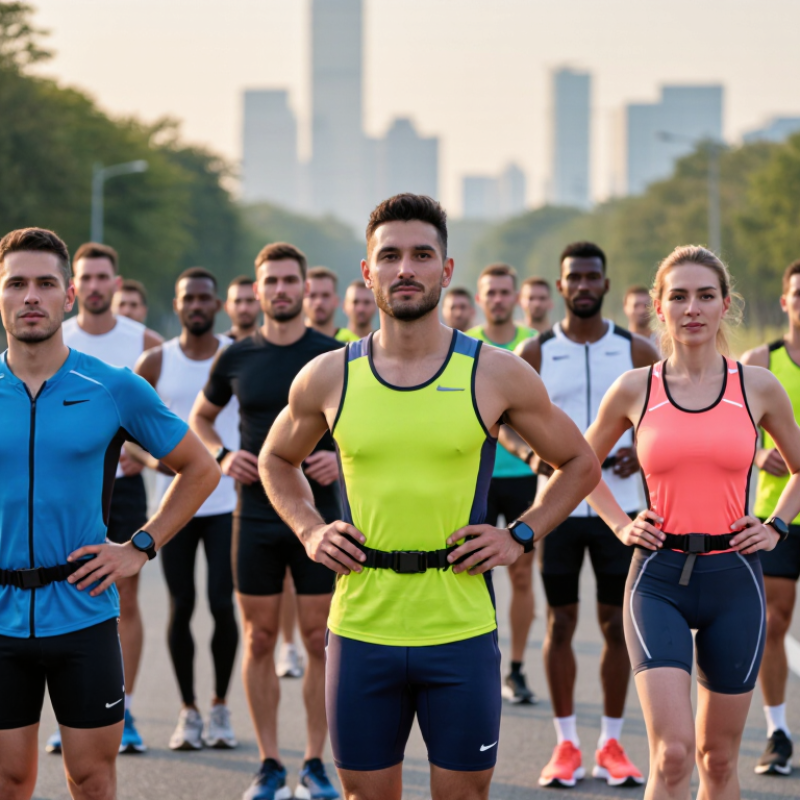
What to Look for in Wholesale Marathon Running Apparel Suppliers
Choosing wholesale marathon running apparel suppliers requires more than comparing unit prices. Start with fabric performance. Ask for fiber composition, fabric weight, moisture management data, UPF rating, and shrinkage results. A sample should survive repeated washing without twisting seams or fading prints. Test it yourself. Wear a shirt during a long training run, then inspect the collar, underarm panels, and waistband. Small irritations become race-day problems.
Check whether the supplier understands marathon-specific construction. Flat seams reduce rubbing, while secure pockets should hold a phone without bouncing. Reflective details must remain visible after washing. Request size charts with actual garment measurements, not vague labels. Review grading across sizes; a comfortable medium does not guarantee a usable plus-size fit. Ask about minimum order quantities, sample charges, production capacity, and lead times in writing. Clear records are a reliability signal.
Dependable suppliers explain quality inspections and material traceability without avoiding difficult questions. Request pre-shipment photos, measurement reports, and a process for handling defects. Their answers should be specific. Vague promises deserve caution. Pricing also needs context, since unusually low quotes may hide weaker fabric or rushed stitching. Buyers often focus on logos and overlook seam strength. That mistake is easy to repeat. Leave room for a small pilot order, because real runners reveal problems that showroom samples cannot.
How to Evaluate Supplier Quality, Production Capacity, and Compliance
Top 10 Wholesale Marathon Running Apparel Suppliers
Choosing a marathon apparel supplier requires more than comparing unit prices. Request production samples and inspect every seam, hem, zipper, and reflective panel. Check fabric weight, stretch recovery, colorfastness, breathability, and wash durability. A reliable supplier should explain test methods and provide consistent measurements across sample sizes. Small defects matter. A loose thread can become a runner’s irritation during a four-hour race.
Production capacity must match your event schedule, not just your forecast. Ask for monthly output, machine availability, staffing levels, and subcontracting policies. Review a realistic production timeline, including fabric purchasing, cutting, sewing, inspection, and shipping. Request references from comparable orders when possible. A factory may promise 50,000 shirts, yet struggle with a 10,000-piece deadline during peak season. Capacity claims need evidence.
Tips: Start with a controlled pilot order. Compare the approved sample with finished cartons, not only factory photos. Check quality records, corrective-action reports, and order traceability. Confirm compliance with applicable product safety, labeling, labor, environmental, and chemical requirements in your target markets. Independent audits can help, but they are not perfect. Ask how recent the documents are. I would also leave time for mistakes; rushed approvals often create expensive rework. Suppliers who answer difficult questions clearly are usually safer partners than those offering instant certainty.
Top 10 Wholesale Marathon Running Apparel Suppliers Compared
Comparing the top 10 wholesale marathon running apparel suppliers requires more than checking catalog prices. A reliable review examines fabric performance, minimum order quantities, production timing, and customization quality. Suppliers using lightweight polyester blends often provide better moisture control during long races. However, cheaper fabric can feel rough after repeated washing.
The strongest suppliers offer reflective trims, flat seams, secure pockets, and size ranges suitable for different body shapes. Some accept small trial orders, while others require several hundred pieces per design.
Lead times commonly range from three to eight weeks, excluding shipping. Ask for a physical sample before confirming bulk production. Photos can hide weak stitching and inaccurate colors.
Pricing also changes with fabric weight, printing methods, packaging, and seasonal demand. Ten suppliers may appear similar, yet their communication standards can differ sharply. A dependable supplier gives clear measurement charts, material details, inspection procedures, and replacement terms. Certifications should be checked through valid documentation, not vague website claims.
I would also compare pre-production samples under real training conditions. Wear the shirt for a long run. Wash it twice. Check the seams afterward. One weakness remains easy to miss: some suppliers respond quickly before payment but slowly after an order issue. That detail deserves more attention in any comparison.
How to Assess Pricing, Customization, Minimum Orders, and Delivery
When sourcing wholesale marathon apparel, compare more than the unit price. Ask for a full quotation covering fabric, printing, packaging, inspection, and freight. A low shirt price can hide expensive setup fees. Request samples in your target fabric and size range. Wear them during a short training run. Check seam rubbing, sweat control, pocket stability, and print cracking after washing. Real testing beats polished catalog photos. It may reveal weaknesses.
Customization requires precise documents. Provide logo files, color references, measurement charts, labels, and approved artwork. Ask whether patterns support movement, rather than simply using standard blanks. Confirm sample charges, revision limits, and ownership of approved specifications. Some suppliers promise unlimited changes, but their timelines become vague. Get every detail in writing. Include tolerances for color, measurements, and stitching. A practical sourcing lesson is easy to miss: reflective trim needs careful inspection, and one overlooked detail can delay packing.
Minimum order quantities should match realistic demand. Ask whether colors, sizes, and designs each have separate thresholds. A 1,000-piece MOQ may become several thousand units under these rules. Delivery planning requires production time, sample approval, holiday closures, and transit buffers. Request milestone dates, carton dimensions, tracking procedures, and a remedy for late shipment. Calculate landed cost per delivered garment, not factory cost alone. Forecasts are often wrong. Compare suppliers using identical specifications, and record every assumption before placing an order.
| Rank | Anonymous Supplier Profile | Best-Fit Product Focus | Indicative Wholesale Price per Technical Top |
Typical Minimum Order | Customization Options | Sample & Development | Standard Production Lead Time | Delivery Considerations | Assessment Score |
|---|---|---|---|---|---|---|---|---|---|
| 1 | Large-scale performancewear factory | Moisture-wicking race tops, singlets, shorts, and tights | US$6–12 | 500–1,000 pieces per style/color | Sublimation Cut-and-sew Private label | 7–14 days; sample fees commonly refundable after bulk confirmation | 30–50 days after approval | Best for repeat programs; sea freight is usually the lowest-cost option, while air freight is faster. | 4.8/5 |
| 2 | Specialized custom teamwear manufacturer | Club uniforms, marathon event kits, and coordinated team collections | US$8–16 | 100–300 pieces per design | All-over print Name/number printing Custom labels | 10–18 days; digital artwork approval normally required | 25–45 days after final artwork approval | Suitable for event organizers needing consistent sizing and repeatable team orders. | 4.7/5 |
| 3 | Mid-volume activewear OEM | Lightweight running shirts, compression layers, and warm-up apparel | US$7–15 | 200–500 pieces per style | Fabric selection Logo application Trim changes | 8–15 days; prototype charges vary by complexity | 35–55 days | Offers a balance between customization depth and manageable order quantities. | 4.6/5 |
| 4 | Low-MOQ private-label workshop | Small-batch race apparel for clubs, startups, and local races | US$10–20 | 50–150 pieces per style | Logo embroidery Heat transfer Color adjustments | 7–12 days; fewer revisions may be included | 20–40 days | Lower MOQs can reduce inventory risk, but unit prices are generally higher. | 4.5/5 |
| 5 | Sustainable sportswear manufacturer | Recycled-polyester tops, eco-focused race kits, and packaging alternatives | US$9–18 | 300–800 pieces per style/color | Recycled fabrics Low-impact packaging Certification support | 10–20 days; fabric documentation should be checked before approval | 40–60 days | Confirm material certificates, recycled content claims, and chain-of-custody documentation. | 4.4/5 |
| 6 | Full-service sports apparel exporter | Multi-category orders including tops, bottoms, socks, caps, and accessories | US$8–17 | 300–1,000 pieces per category | Tech packs Packaging Mixed product sourcing | 10–21 days; consolidated samples may take longer | 35–60 days | Useful for one-stop purchasing, but verify whether products are factory-made or externally sourced. | 4.3/5 |
| 7 | Digital sublimation specialist | Bold graphics, sponsor-heavy race shirts, and limited-edition event apparel | US$7–14 | 75–250 pieces per design | Full sublimation Unlimited artwork colors Pantone matching | 5–12 days; artwork quality directly affects results | 20–40 days | Confirm color tolerance, print placement, and wash-testing procedures before production. | 4.2/5 |
| 8 | Cut-and-sew technical garment factory | Premium structured garments, technical panels, and performance-specific fits | US$11–24 | 500–1,500 pieces per style | Custom patterns Seam construction Performance trims | 14–25 days; pattern development may incur separate fees | 45–70 days | Higher development requirements can improve fit but usually increase cost and lead time. | 4.1/5 |
| 9 | Rapid replenishment supplier | Basic running tops and repeat orders for established designs | US$6–13 | 100–500 pieces per reorder | Stock fabrics Logo decoration Repeat production | 5–10 days for existing styles; new designs require longer development | 15–35 days for repeat orders | Fastest when colors, fabrics, patterns, and trims are already approved and available. | 4.0/5 |
| 10 | Private-label fulfillment partner | Small collections with labeling, packing, and direct-to-customer support | US$12–25 | 50–200 pieces per style | Woven labels Custom packaging Fulfillment services | 7–18 days; service fees may apply for packaging and handling | 25–50 days, excluding final-mile fulfillment | Best for smaller brands; calculate product, packaging, storage, and fulfillment fees together. | 3.9/5 |
How to Select the Best Supplier for Your Marathon Apparel Needs
Top 10 Wholesale Marathon Running Apparel Suppliers
How to Select the Best Supplier for Your Marathon Apparel Needs
Selecting a marathon apparel supplier requires more than comparing unit prices. Check fabric weight, stretch recovery, seam strength, and moisture control through physical samples. A shirt may feel smooth indoors but become heavy after ten kilometers. Request wash tests, colorfastness reports, and size measurements before placing a bulk order. Small details matter.
Material sourcing also deserves careful review. Textile Exchange reported that polyester represented about 57% of global fiber production in 2023, while recycled polyester remained a smaller share. Ask suppliers to identify fiber content and provide recognized documentation. Avoid vague claims such as “eco-friendly.” They are difficult to verify. A transparent supplier should explain factory locations, production capacity, lead times, and quality-control procedures.
Reliable delivery is equally important. Request a production calendar with approval deadlines, inspection points, and shipping buffers. For large races, order a pre-production sample using the final artwork and trims. Independent inspection can reduce avoidable defects, although it adds cost. I have learned that the cheapest quotation can become expensive after rushed replacements, inconsistent sizing, or missing cartons. That lesson is easy to overlook. Compare suppliers using total landed cost, not the factory price alone. The International Organization for Standardization recommends documented quality processes, so ask how complaints are recorded and corrected. A strong supplier welcomes difficult questions.
FAQS
Compare fabric performance, minimum orders, lead times, customization, inspection, and communication. Catalog price alone is not enough.
Lightweight polyester blends can improve moisture control. Rough fabric may irritate skin after repeated washing. Test comfort during a real run.
Look for flat seams, reflective trims, secure pockets, and broad size ranges. Check stitching closely. Weak seams can hide in photographs.
Request a complete quotation covering fabric, printing, packaging, inspection, and freight. Setup fees may make a cheap shirt expensive.
Ask whether minimums apply separately to colors, sizes, and designs. A 1,000-piece requirement may become several thousand units.
Provide artwork, color references, labels, and measurement charts. Request a physical sample and check print cracking after two washes.
Production commonly takes three to eight weeks, excluding shipping. Add time for sample approval, holidays, transit, and unexpected delays.
Review measurement charts, materials, inspection procedures, replacement terms, and valid certification documents. Vague website claims prove little.
Record response times before and after ordering. Some suppliers answer quickly at the beginning, then become slow when problems appear. This risk deserves more attention.
Use the delivered cost, including production, printing, packaging, inspection, freight, and possible revisions. Forecasts fail. Keep every assumption recorded.
Conclusion
Choosing the right Wholesale Marathon Running Apparel supplier requires more than comparing prices. This guide explains how to assess fabric quality, stitching, breathability, durability, production capacity, and compliance with responsible manufacturing standards. It also highlights the importance of reliable communication, consistent quality control, and the ability to meet demanding event schedules. By comparing ten supplier types, buyers can better understand differences in product range, customization options, minimum order quantities, lead times, and delivery support.
The guide also provides a practical framework for evaluating total costs rather than focusing only on unit prices. Buyers should consider sample approval, printing or design requirements, size ranges, packaging, shipping arrangements, and after-sales communication before making a decision. Whether ordering apparel for a large marathon, a running club, or a promotional event, the best supplier should offer a balanced combination of quality, production reliability, flexible customization, competitive pricing, and dependable delivery. Careful evaluation helps ensure that the selected partner can support both current needs and future growth.

Blog Tags: